Scottsdale buyers are lifestyle-driven and market-savvy. They're not just purchasing square footage — they're investing in a way of living that blends desert luxury with modern functionality. In 2026, the homes that command the highest sale prices and move the fastest share one thing in common: they've been strategically upgraded with the amenities buyers actually prioritize.
Whether you're preparing to sell or building long-term equity, here are the seven amenities that deliver the strongest return in Scottsdale's competitive market.
1. Resort-Style Outdoor Living Spaces
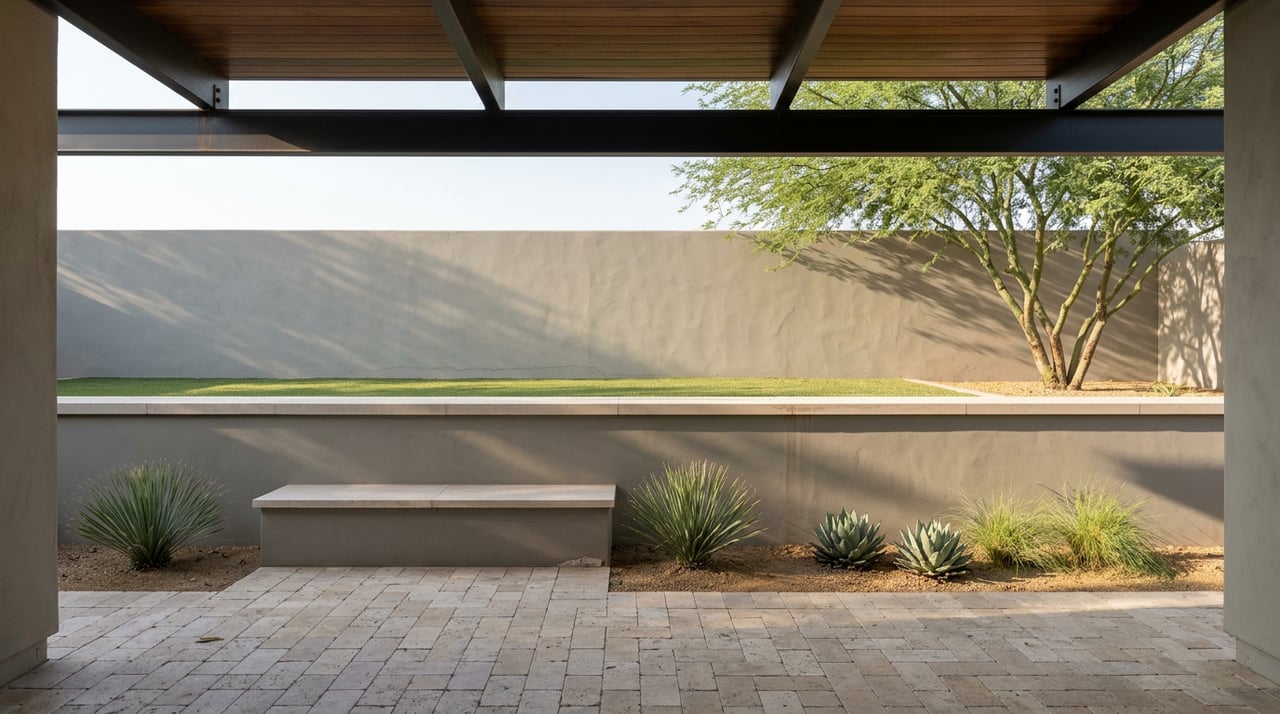
With over 300 days of sunshine a year, outdoor living in Scottsdale isn't a bonus — it's a baseline expectation. Buyers moving to the area specifically seek what local designers call the "Desert Indoor-Outdoor Flow," and a home without a functional backyard is often viewed as incomplete before they've even stepped inside.
The features that move the needle most are those engineered for the heat. High-pressure misting systems can drop patio temperatures by 20°F to 30°F, making outdoor spaces usable even in peak summer. Modern Alumawood pergolas provide critical UV protection without the warping and rotting risk of traditional wood. Built-in kitchens with professional-grade grills and bar counters keep hosts in the conversation, while gas fire pits round out the space for Scottsdale's cool winter evenings — which can dip into the 40s.
From an ROI standpoint, outdoor spaces perform exceptionally well here compared to cooler climates because the usable season is essentially year-round. Well-designed travertine or paver patios see 80–100% ROI, outdoor kitchens can yield 100–200% ROI in the Southwest, and homes with covered outdoor structures tend to sell more than 10 days faster in the Scottsdale market. Recent 2025–2026 data shows that resort-style backyards command a 5–8% premium on total home price.
2. Upgraded Pool & Water Features
In Scottsdale, a pool isn't a luxury — it's closer to a utility. In established neighborhoods and the luxury tier, 80–90% of homes feature a private pool, and in areas like Silverleaf or Troon, that number approaches 100%. A home without one often sells at a 5–8% discount, with buyers factoring in the $80,000+ cost of building one themselves.
What separates a high-value pool from a standard one is the "resort-style" designation. Baja shelves (shallow tanning ledges) are considered a must-have in 2026. PebbleTec or glass tile finishes signal durability and high-end aesthetics. Spillover spas create a waterfall effect and provide a therapeutic hot/cold element that buyers in the luxury segment specifically seek. Smart LED lighting systems sync to home automation for evening ambiance and have become the new baseline expectation.
A well-maintained pool in Arizona adds 7–15% to total home value. If you already have a pool, a strategic refresh — resurfacing with PebbleTec, updating waterline tile, and upgrading to a variable-speed pump — typically runs $15,000–$30,000 and can make a 20-year-old pool look brand new. In-floor cleaning systems are an increasingly valuable selling point given Scottsdale's dust and monsoon seasons; buyers will pay a premium for a pool that largely maintains itself.
3. Gourmet Kitchen
The kitchen remains the emotional center of a home sale, but in Scottsdale, it carries additional weight. At the luxury price points common to zip codes like 85255, 85262, and 85266, a dated kitchen isn't just a negotiating point — it's a deal-breaker that can leave a home sitting on the market for months.
The ROI math strongly favors strategic refreshes over full gut renovations. A $25,000–$35,000 minor remodel — cabinet refacing, new quartz countertops, updated hardware — can return over 100% in the Phoenix/Scottsdale metro by simply removing the "work" for a buyer. Major luxury overhauls exceeding $150,000 typically yield 35–55% direct financial ROI, though their value is better measured in how they prevent a home from being passed over entirely.
In terms of what buyers expect in 2026, the market has clearly shifted toward what designers are calling Organic Modernism. Sub-Zero, Wolf, and Cove appliances remain the gold standard, with induction cooktops gaining ground for their heat management advantages in the Arizona summer. Massive waterfall islands with single-slab quartzite tops serve as the social hub. The all-gray palette of the 2010s is perceived as dated; warm whites, White Oak cabinetry, and creamy neutral tones are outperforming across buyer preference surveys. One emerging feature worth noting: the "scullery" or prep kitchen — a secondary, hidden workspace for heavy cooking — is now the most requested luxury floor plan modification in the Scottsdale market.
4. Spa-Inspired Primary Bathroom
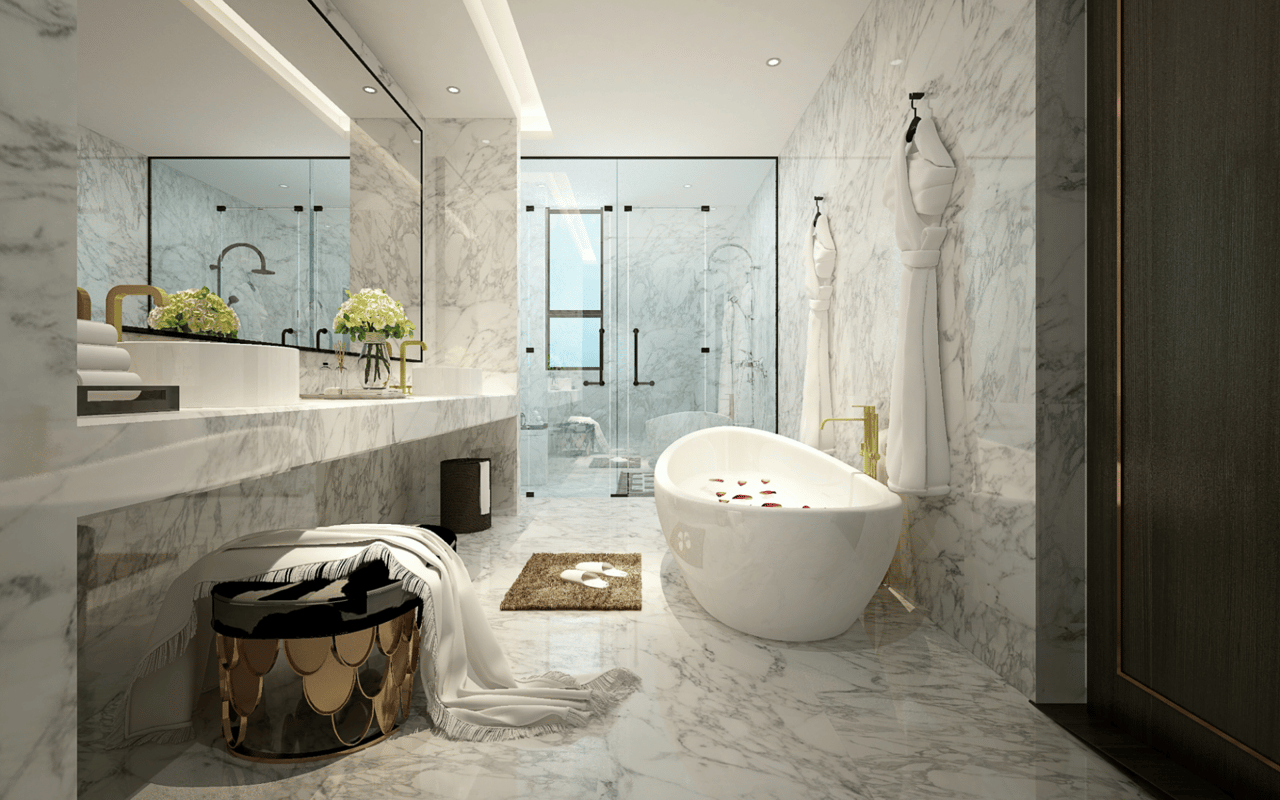
Scottsdale buyers in 2026 don't want a bathroom — they want a decompression zone. Heavily influenced by local luxury resorts like the Phoenician and Sanctuary, the expectation is a private wellness retreat that delivers the oversized tile, hidden drains, and curated lighting of a five-star hotel experience.
Three features have become the baseline for "luxury" status: frameless wet rooms (where the shower and soaking tub share a single glass enclosure for a seamless, high-end finish), freestanding soaking tubs in matte stone or resin that serve as a sculptural focal point, and heated floors — a surprising must-have in the desert, where tile can feel like ice on winter nights. Heated floors carry a 65–70% ROI and reliably register as a premium feature during showings.
For sellers not ready to commit to a full renovation, high-perceived-value swaps can still move the needle. Backlit mirrors and toe-kick LED strips immediately mimic a spa atmosphere. Swapping chrome fixtures for brushed gold or matte black reads as a significant upgrade at a fraction of the cost. Large-format 24x48 tile — with fewer grout lines — makes a compact bathroom feel dramatically more expensive. Arizona's regional data shows a midrange bathroom remodel yields approximately 82% ROI, well above the national average, and buyer surveys indicate that 80% of buyers would trade a larger bedroom for a more luxurious shower.
5. Dedicated Home Office
The home office has permanently moved from pandemic-era convenience to top-three buyer priority in Scottsdale. With Arizona's tech and healthcare sectors driving significant in-migration from coastal cities, the professionals relocating here are spending 40+ hours a week working from home — and they expect a space that reflects that reality.
The distinction between a high-value office and a low-value one comes down to architectural permanence. A bedroom with a desk signals "afterthought." Glass French doors, floor-to-ceiling built-in cabinetry, hardwired Cat6 ethernet, and solid-core doors with acoustic treatment signal "executive suite." In Scottsdale's luxury segment, dual dedicated offices — designed for two remote-working professionals — are increasingly becoming a standard floor plan feature rather than a special request.
Homes with a professional-grade office currently sell 15% faster in Scottsdale than those where a buyer has to figure out where they'll work. For those working with existing floor plans, the most effective conversions are tandem garage third-stall conversions (ideal for client-facing professionals given the separate entrance) and second-story landing lofts turned into built-in tech hubs. These creative conversions typically yield 50–60% direct ROI, but their real value is in liquidity — they help homes move faster.
6. Smart Home & Energy Efficiency Features
In a climate where summer utility bills can rival a car payment, energy efficiency has become the "invisible luxury" that increasingly savvy Scottsdale buyers factor into their offers. This is an area where logical ROI and lifestyle ROI converge — and it's a gap many sellers overlook.
Solar is the most significant single upgrade in this category. Arizona homes with solar panels sell for an average of 6.8% more than those without, translating to a $25,000–$40,000 value add for a median Scottsdale home. One critical distinction: owned solar systems add value and simplify the sale, while leased systems can actively hinder it, creating credit hurdles and third-party contract negotiations that push buyers away. With Scottsdale's sun exposure, the average owned solar system pays for itself in roughly six years.
EV charging infrastructure is becoming the new standard garage amenity. A professionally installed Level 2 (240V) charger can increase home value by $10,000–$17,000, and homes with charging infrastructure sell up to 13% faster. In the luxury tier, where buyers often own multiple EVs, a garage pre-wired for dual chargers is a high-impact upgrade for a relatively modest investment of $1,500–$3,000. Beyond solar and EV, smart thermostats (AI-driven systems that pre-cool during off-peak hours) add roughly 3% to home value per NAR data, while smart irrigation systems are particularly valued by Scottsdale HOAs for their water conservation alignment and automated shades reduce solar heat gain while adding a hotel-suite aesthetic to primary suites.
7. High-End Flooring & Cohesive Interior Design
Flooring is one of the few upgrades that touches every square inch of a home, making it the most powerful visual anchor available to a seller. In Scottsdale's open-concept floor plans, it's also the connective tissue that determines whether a home feels cohesive and expensive — or choppy and dated.
Buyers psychologically equate new, consistent flooring with a well-maintained property. Mismatched materials between rooms prompt immediate mental discounting, as buyers begin calculating the future hassle and cost of replacement before they've finished the tour.
For Scottsdale's climate, the best materials balance thermal performance with stability. Large-format porcelain (24x48 or larger) is the current gold standard — it stays cool in 115°F heat and replicates the look of natural stone or concrete without the maintenance. Engineered hardwood in White Oak or Walnut offers warmth and stability in the desert's dry air without the shrinkage risk of solid wood. Luxury vinyl plank has earned its place in the market: 2026 LVP is nearly indistinguishable from real wood and is 100% waterproof — essential for homes with pool traffic and pets.
The cohesive flow principle is paramount in 2026. Leading Scottsdale designers now recommend a single hard-surface material across the entire main level to create an uninterrupted visual plane that makes 2,500 square feet read like 3,000. The most sophisticated move for indoor-outdoor homes is matching interior tile to exterior patio pavers using gauged porcelain, effectively blurring the boundary between inside and outside and increasing perceived square footage. A high-quality flooring upgrade in the Scottsdale/Phoenix metro yields 70–80% direct ROI — and a measurably faster sale.
Prioritize Like a Scottsdale Buyer
The through-line across all seven amenities is the same: Scottsdale buyers pay for lifestyle, not just square footage. They want a home that's move-in ready, resort-calibrated, and built for the desert. Each of these upgrades signals exactly that.
If you're preparing to sell or want to know which investments make the most sense for your specific property and price point, the Craig Bennett Group can help you prioritize. Craig Bennett is an Arizona-native Associate Broker at Russ Lyon Sotheby's International Realty with deep roots in the Scottsdale market and a track record across Phoenix, Scottsdale, and Paradise Valley.
Ready to maximize your home's value? Contact the Craig Bennett Group today or call (602) 908-5279 to get started.