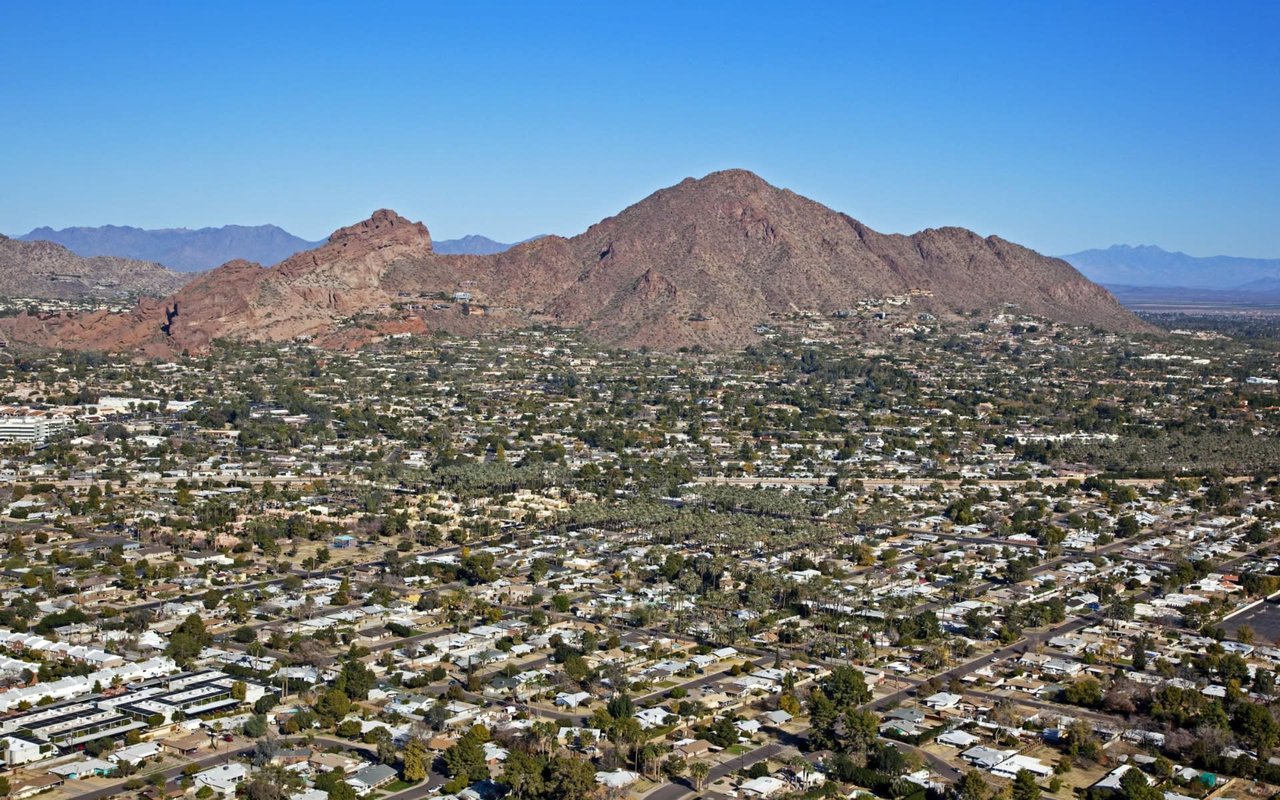
Welcome to Paradise Valley
Paradise Valley, Arizona, is a small, affluent town located between Scottsdale and Phoenix. Known for its stunning desert landscapes, luxurious resorts, and sprawling estates, Paradise Valley offers a serene and upscale lifestyle. The town boasts a quiet, residential atmosphere with world-class golf courses, scenic hiking trails, and sweeping views of Camelback Mountain. Its convenient location provides easy access to the urban amenities of Phoenix and Scottsdale while maintaining a secluded, resort-like ambiance, making it one of the most desirable places to live in Arizona.
Market Overview
As of August 2024, the
Paradise Valley real estate market is marked by substantial price growth. Home prices have surged 58.2% compared to the previous year, with the median home price now reaching $5.0 million. Despite this increase in prices, the market has slowed somewhat, with homes spending an average of 122 days on the market, up from 53 days last year. In August 2024, 19 homes were sold, slightly fewer than the 21 homes sold during the same month in 2023.
The median sale price per square foot in Paradise Valley has decreased by 4.9%, now standing at $774. The market is generally not very competitive, with homes selling for an average of 6% below list price. Properties typically go pending in about 71 days, while hotter homes may sell for 2% below list price and go pending in around 31 days. This dynamic reflects the high price point and the unique nature of Paradise Valley real estate, where multiple offers are rare and buyers tend to take more time making decisions.
Local Attractions
Paradise Valley is home to several notable attractions and landmarks that add to its exclusive charm. Key points of interest include:
- Camelback Mountain – A famous hiking destination offering breathtaking views of the Phoenix Valley.
- Mountain Shadows Resort – A historic luxury resort with golf, fine dining, and wellness amenities.
- The Sanctuary Camelback Mountain Resort – Known for its spa services, private retreats, and renowned restaurant, Elements.
- Paradise Valley Country Club – A private, members-only club offering world-class golfing, tennis, and social activities.
- Cosanti – The gallery and studio of Paolo Soleri, a visionary architect known for his environmental and architectural works.
Dining, Shopping, and Entertainment
Paradise Valley offers a refined selection of dining, shopping, and entertainment options that cater to its upscale residents:
- Restaurants and Cafes: Paradise Valley is known for its high-end dining options, many of which are located within luxury resorts. Elements at Sanctuary Camelback Mountain serves farm-fresh cuisine with an Asian twist, while El Chorro offers Southwestern-inspired dishes in a historic setting. For casual fare, The Hermosa Inn's Lon’s provides a rustic yet refined dining experience.
- Bars and Nightlife: Although Paradise Valley is more known for its serene atmosphere than its nightlife, several resort bars like Jade Bar at the Sanctuary offer sophisticated cocktail lounges with stunning views. The nearby areas of Scottsdale and Phoenix provide access to more bustling nightlife options.
- Shopping: For high-end shopping, residents often head to nearby Scottsdale, where the Scottsdale Fashion Square offers luxury brands such as Louis Vuitton, Gucci, and Chanel. Local boutiques in and around Paradise Valley feature curated home goods, art, and custom jewelry. Gourmet grocery stores such as AJ's Fine Foods are popular for residents seeking specialty products and high-quality ingredients.
Local Culture
Paradise Valley exudes a culture of luxury, privacy, and tranquility. The town is characterized by its sprawling estates, lush landscapes, and high-end living, which has attracted a mix of successful entrepreneurs, retirees, and affluent families. Local culture revolves around an outdoor, health-conscious lifestyle, with residents frequently enjoying the area’s hiking trails, golf courses, and wellness-focused amenities at nearby resorts and spas. While the community is quiet and laid-back, there is also a strong appreciation for the arts, architecture, and fine dining. Events and social gatherings often take place at private clubs or resorts, adding to the exclusive feel of the town.
Though Paradise Valley is a peaceful, residential area, its proximity to Scottsdale and Phoenix allows residents to tap into the vibrant cultural scenes of those cities, including art galleries, live music, theater, and sporting events. Traditions in Paradise Valley are centered around family life, luxurious entertaining, and outdoor living, with many homes designed to take full advantage of the natural beauty of the desert environment.
Transportation
Public transportation in Paradise Valley is limited, as the town's layout and lifestyle lean toward private vehicle use. Most residents rely on cars to get around, with easy access to major roadways like Lincoln Drive, Tatum Boulevard, and Scottsdale Road connecting them to neighboring cities. Paradise Valley does not have its own public transit system, but nearby areas, such as Scottsdale and Phoenix, offer more robust transportation options.
For those looking to use public transportation, Valley Metro provides bus routes and light rail services in the greater Phoenix area. The closest light rail stations are located in downtown Phoenix, and some Valley Metro bus routes connect Scottsdale and Phoenix. Ride-sharing services such as Uber and Lyft are also commonly used by residents.
Schools & Education
Paradise Valley is served by several top-rated schools, both public and private, known for their strong academic programs and commitment to excellence. The town is located within the boundaries of the Scottsdale Unified School District (SUSD), one of Arizona’s most highly regarded districts.
- Cherokee Elementary School (Grades K-5): Rated highly for its academics and supportive community. Cherokee offers a variety of enrichment programs, including gifted education and arts.
- Cocopah Middle School (Grades 6-8): A well-regarded school known for its rigorous academics and strong extracurricular programs.
- Chaparral High School (Grades 9-12): This prestigious high school is known for its outstanding academic achievements, including high test scores, Advanced Placement (AP) programs, and strong athletics and arts programs.
- Phoenix Country Day School (Pre-K through Grade 12): A private, college-preparatory school known for its small class sizes, high academic standards, and comprehensive arts and athletics programs.
- Tesseract School (Preschool through Grade 8): A progressive private school with a focus on project-based learning and personalized instruction.
- All Saints’ Episcopal Day School (Preschool through Grade 8): A private, faith-based school with a strong academic curriculum and a focus on character development and leadership.
- Arizona State University (ASU), located in nearby Tempe, is one of the largest and most respected public universities in the country.
- Grand Canyon University in Phoenix offers a variety of undergraduate and graduate programs.
- Scottsdale Community College provides affordable, quality education and serves as a stepping stone for students planning to transfer to four-year universities.
Paradise Valley offers a unique blend of luxury, natural beauty, and a tranquil lifestyle that appeals to those seeking privacy and elegance. With its world-class amenities, proximity to the vibrant cultures of Phoenix and Scottsdale, and a commitment to outdoor living, the town provides an exceptional environment for families, retirees, and affluent professionals. The thriving real estate market, combined with top-rated schools, upscale dining, and exclusive resorts, solidifies Paradise Valley as one of Arizona's most coveted residential communities. Whether you're drawn to its scenic desert landscapes or its luxurious lifestyle, Paradise Valley remains a premier destination for those looking to live in a sophisticated, yet serene, setting.
Housing Types & Architectural Styles
Paradise Valley's real estate landscape is dominated by custom-built luxury estates that typically sit on 1–5 acre lots, with some properties exceeding 10 acres. The architectural palette ranges from Spanish Colonial and Mediterranean Revival estates with tile roofs and stucco exteriors to sleek mid-century modern designs featuring floor-to-ceiling glass, flat rooflines, and integration with the desert terrain.
Contemporary desert architecture is increasingly popular, characterized by clean lines, expansive indoor-outdoor living spaces, and use of natural materials like stone, steel, and wood. Resort-style compounds with casitas, multiple pools, tennis courts, and private spas are common among ultra-luxury properties.
New construction typically emphasizes smart home technology, sustainable building practices, and dramatic mountain views. Traditional ranch-style homes still exist but are often purchased as teardowns for redevelopment.
Homeowner Considerations
Most Paradise Valley properties are not subject to HOA restrictions, offering owners complete control over architectural modifications, landscaping, and exterior aesthetics—though the town itself enforces strict zoning and hillside development ordinances. Short-term vacation rentals are prohibited under town ordinance to preserve the residential character.
Water conservation is critical; residents rely on private wells or municipal water, and desert landscaping with native plants is both common and encouraged through town incentives. Wildfire risk is moderate to high in hillside areas near open desert, requiring defensible space maintenance and potential premium insurance costs.
Property maintenance demands are significant—pools, HVAC systems, and landscape irrigation require year-round attention, and many owners employ full-time property managers or caretakers for multi-acre estates.
Cost of Living & Taxes
Paradise Valley's median property tax rate hovers around 0.5–0.7% of assessed value, lower than many coastal luxury markets but still resulting in substantial annual bills given home values. A $5 million property typically generates $25,000–$35,000 in annual property taxes. Utility costs run higher than Scottsdale or Phoenix due to larger lot sizes—expect $300–$800 monthly for electricity during peak summer cooling months, plus water bills that can exceed $200–$500 monthly for properties with extensive landscaping and pools.
Compared to Scottsdale, Paradise Valley offers larger lots and more privacy but comes with 20–40% higher entry prices for comparable square footage. Phoenix proper offers significantly lower home prices (median around $450,000), but without the exclusivity, lot sizes, or resort-like environment.
Notable Sub-Areas / Micro-Neighborhoods
- Camelback Country Estates: Situated on the southern slopes of Camelback Mountain, featuring some of the most expensive and architecturally significant homes with dramatic elevation views.
- Clearwater Hills: A gated community in the northeast section, known for large custom estates on 2+ acre lots with mountain views and privacy.
- Cheney Estates: Located near the Camelback Inn, this area features mature landscaping, older estate homes (1960s–1980s), and some of the town's most established properties.
- Mummy Mountain: Named for the distinctive mountain formation, this area offers steep hillside lots, mid-century modern homes, and sweeping valley views; properties often command premiums for elevation and vistas.
- Tatum Highlands: A more recently developed area with contemporary estates and larger floor plans, popular with families seeking newer construction.
- Lincoln Drive Corridor: Highly desirable stretch with resort access, walkability to amenities, and some of the town's most iconic properties.
Factors to Consider When Buying
Beyond standard due diligence, Paradise Valley buyers must evaluate flood zone designations—some properties near washes require flood insurance despite desert climate. Review hillside building restrictions if planning additions or renovations; the town's Hillside Development Regulations limit grading and structure placement. Verify well water quality and capacity on properties with private wells.
Check for endangered species habitat designations that may restrict development. Investigate lot zoning (most are zoned for 1-acre minimum, but some older parcels allow subdivision). Understand septic vs. sewer—some older estates still use septic systems. Evaluate sun exposure and prevailing winds for outdoor living spaces.
Confirm school district boundaries; some areas feed into Paradise Valley Unified School District while others go to Scottsdale Unified. Consider proximity to trailheads if privacy matters—public hiking access points can generate traffic. Review utility easements and access roads on larger parcels. The market moves slowly; expect 60–120+ days from listing to close.
Factors to Consider When Selling
Paradise Valley's selling season peaks November–April when snowbirds and out-of-state buyers are most active; summer listings typically see 30–40% fewer showings. Pricing strategy is critical in this thin market—overpricing by even 5–10% can result in months of stagnation. Professional staging focusing on indoor-outdoor flow and mountain views significantly impacts perceived value; many sellers invest $50,000+ in pre-sale landscaping and interior updates.
Target buyer demographics skew toward tech executives, retirees, professional athletes, and established business owners—marketing should emphasize privacy, space, and lifestyle over pure investment return. High-ROI upgrades include kitchen modernization, pool resurfacing, smart home systems, and outdoor entertainment spaces. Drone photography and video tours are essential given lot sizes and views. Prepare for longer contingency periods—luxury buyers often conduct extensive inspections, well testing, and property surveys.
Disclose all known issues proactively; affluent buyers have resources to uncover problems post-close. Consider pre-listing inspections to address concerns upfront. Work with agents experienced in $2M+ transactions who understand the unique Paradise Valley market dynamics and have networks within private clubs and resort communities.
Why People Move to Paradise Valley
Paradise Valley attracts buyers seeking uncompromising privacy on expansive lots where neighbors are measured in acres, not feet. The town delivers resort-caliber living without the constraints of resort ownership—residents enjoy world-class golf, spas, and dining within minutes while controlling their own estates. Dramatic mountain views, particularly of Camelback and Mummy Mountain, provide daily visual rewards that justify premium prices. Lot sizes accommodate multi-generational compounds, horse facilities, and private recreational amenities impossible in denser communities.
The location offers a strategic balance: Scottsdale's upscale dining, shopping, and entertainment are 10–15 minutes away, while Phoenix's airport, arts district, and professional sports venues remain easily accessible—yet Paradise Valley itself remains insulated from traffic, noise, and urban density.
The absence of commercial development preserves a residential sanctuary feel. For those who've achieved significant success and prioritize space, views, exclusivity, and a sophisticated desert lifestyle, Paradise Valley represents the apex of Arizona living.
---
And, for your convenience, feel free to
register for a free account to receive email alerts whenever new
Paradise Valley listings come on the market that match your specific criteria.