By Craig Bennett Group
Paradise Valley occupies a unique position in the American real estate landscape. With a median home price around $3.7 million, a 10-year appreciation rate of more than 160%, and a buyer pool that includes cash-ready executives and entrepreneurs relocating from coastal markets, this isn't a typical suburban investment. It's one of the most consistently high-performing luxury real estate markets in the country — and the fundamentals that drive it show no sign of shifting.
Key Takeaways
- Paradise Valley has appreciated more than 160% over the last decade — averaging more than 10% annually — placing it in the top 10% of all communities nationally.
- The luxury segment is largely insulated from mortgage rate pressure, with cash buyers dominating at the upper end of the market.
- Severely constrained land supply and a single-family-only zoning structure protect long-term value in a way few markets can match.
- Out-of-state migration from California, Chicago, and the Pacific Northwest continues to drive sustained demand.
A Decade of Outperformance
The data on Paradise Valley's appreciation is straightforward and compelling. Over the last ten years, Paradise Valley real estate appreciated more than 160%, placing the town in the top 10% of all communities in the country. A record-setting sale of $32.4 million in August 2025 underscored the trajectory, with local agents noting it's only a matter of time before a transaction reaches $40 million. Per-square-foot pricing has moved from around $685 before COVID to well above $2,000 for homes with Camelback Mountain views.
The Numbers That Define the Market Today
- Median sold prices around $3.5–$3.7 million as of late 2025, with listing prices approaching $4.7 million at the upper end
- Price-per-square-foot rising steadily, with premium view properties now exceeding $2,000 per square foot
- Strong transaction volume with 447 residential sales in the past 12 months and increasing year-over-year activity
- Days on market tightening for well-priced properties, with motivated buyers moving decisively when the right home appears
These aren't speculative numbers — they reflect the consistent behavior of a market with genuine structural advantages.
What Makes the Supply Side So Compelling
Paradise Valley's most durable investment advantage is one that can't be manufactured: the town is almost entirely built out, and its zoning prohibits the high-density development that dilutes value in other markets. There are no apartment complexes, no commercial corridors, and no multi-family projects competing with single-family home values. Every lot that gets developed or redeveloped represents a finite opportunity in a fixed supply of roughly 4,900 homes.
Why Supply Constraints Protect Long-Term Value
- Single-family residential zoning is essentially the only permitted use across the entire town
- New construction is limited to teardowns and the rare undeveloped parcel — projects like the exclusive Crown Canyon enclave reflect just how scarce true new inventory is
- Arizona's land use environment makes regulatory changes to Paradise Valley's zoning structure highly unlikely
- The combination of constrained supply and growing demand from out-of-state buyers creates the structural conditions for sustained appreciation
Scarcity is a feature, not a limitation. It's one of the core reasons investors who understand this market keep coming back to it.
The Buyer Profile Driving Demand
Understanding who is buying in Paradise Valley explains why the market's performance is so durable. The typical buyer here is a high-net-worth individual — often a corporate executive, entrepreneur, or retiree — relocating from California, Chicago, or the Pacific Northwest in search of a lower tax burden, better lifestyle value, and the kind of space that coastal markets simply can't offer at any price. Chicago buyers in particular have been among the most active out-of-state purchasers in recent data.
What's Drawing Out-of-State Buyers to Paradise Valley
- Arizona's favorable state income tax structure compared to California, Illinois, and Washington
- Year-round livability, resort-quality amenities, and proximity to Scottsdale's dining and cultural scene
- A sense of privacy and low density that high-density urban markets cannot replicate
- Cash purchasing power that makes these buyers competitive regardless of interest rate environments
The buyer pool here is not rate-sensitive in the way most residential markets are. At this price point, financing conditions are secondary to lifestyle and value considerations — which makes the market significantly more stable during broader economic shifts.
What Investors Should Focus On
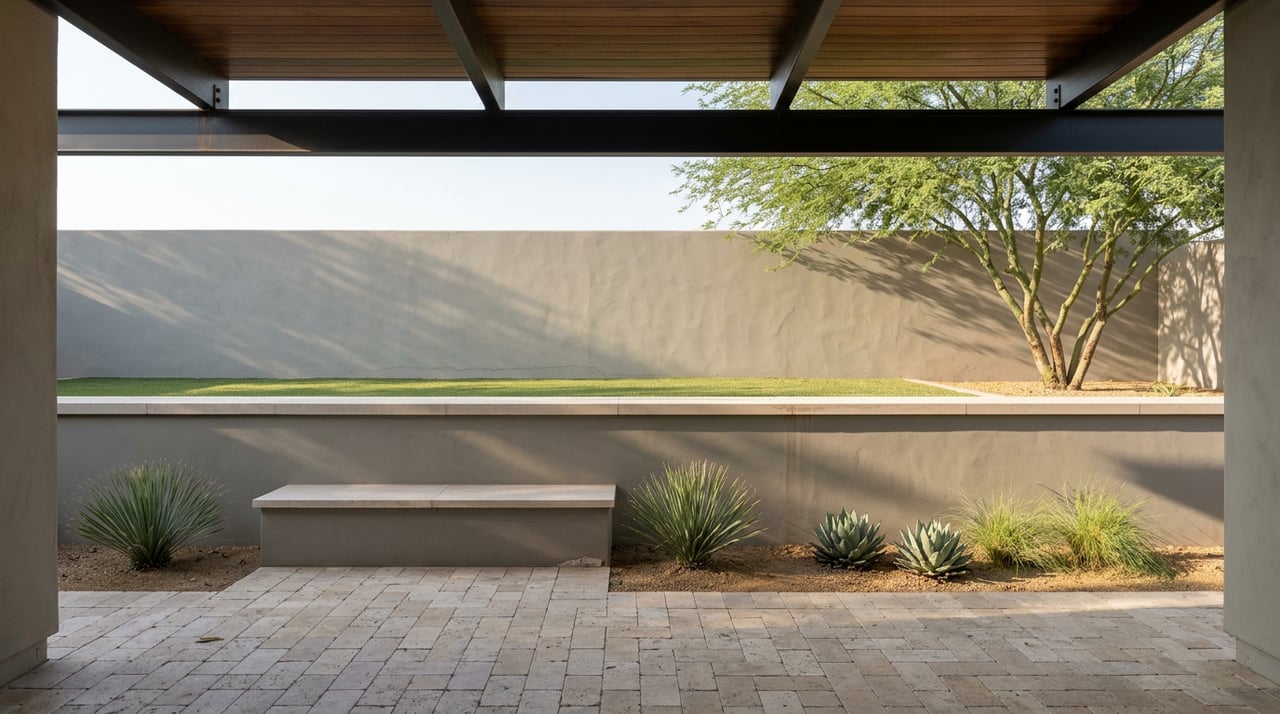
For investors approaching Paradise Valley with a strategic lens, the most consistent performers are properties that combine architectural quality, desert mountain views, and the indoor-outdoor flow that defines the best homes in this climate. Desert modern and custom contemporary designs attract the broadest buyer pool and command the strongest price-per-square-foot premiums.
The Property Characteristics That Maximize Returns
- Mountain views — particularly Camelback — remain the single most durable value driver in Paradise Valley's market
- Newer construction or recently remodeled properties outperform older, unimproved homes as buyers increasingly expect turnkey quality
- Premium amenities — chef's kitchens, glass-walled gyms, spa baths, multi-car galleries — are now baseline expectations rather than upgrades in the luxury segment
- Neighborhoods like Clearwater Hills, Finisterre, and Camelback Country Estates consistently deliver strong resale performance
FAQs
Is Paradise Valley a better long-term hold or a short-term flip market?
Long-term hold. The appreciation history here rewards patience, and the market's structural scarcity means well-positioned properties tend to appreciate steadily rather than spiking. Investors who have held Paradise Valley real estate for a decade or more have seen remarkable returns. Short-term flipping is harder to execute profitably given the entry prices and the caliber of buyer this market attracts.
How does Paradise Valley compare to Scottsdale as an investment?
Both are strong, but Paradise Valley is the more exclusive and constrained market. Scottsdale offers more price variety and a broader buyer pool, while Paradise Valley's single-family-only zoning, higher price floor, and consistent demand from ultra-high-net-worth buyers make it the more insulated of the two. Many investors own in both markets for different reasons.
What's the best way to enter the Paradise Valley market as a new investor?
Start with a clear understanding of the value drivers — views, architectural quality, neighborhood, and condition — rather than simply buying at the lowest available price point. Paradise Valley rewards buying the right property even more than buying in the right market. Working with an agent who knows the town's micro-neighborhoods and current buyer preferences is essential.
Find Your Right Address in Paradise Valley with Craig Bennett Group
Paradise Valley's investment case is clear, but executing well within it requires the kind of local expertise and market intelligence that only comes from genuine experience in this specific market. We're a dedicated local team passionate about connecting buyers and investors with the right properties across Metro Phoenix — and we bring personalized guidance and a seamless experience to every client relationship.
Visit our website today to connect with our team and get started.